Here is the second visualization From the Texas Department of Criminal Justice.
The following image displays the ages of executed offenders on the x-axis and the most common non-trivial words from the offenders’ last statements on the y-axis. Their intersection is color coded based on the proportion of the frequency at that age to the number of offenders at the age. Darker represents a higher proportional frequency and lighter represents lower proportional frequency.
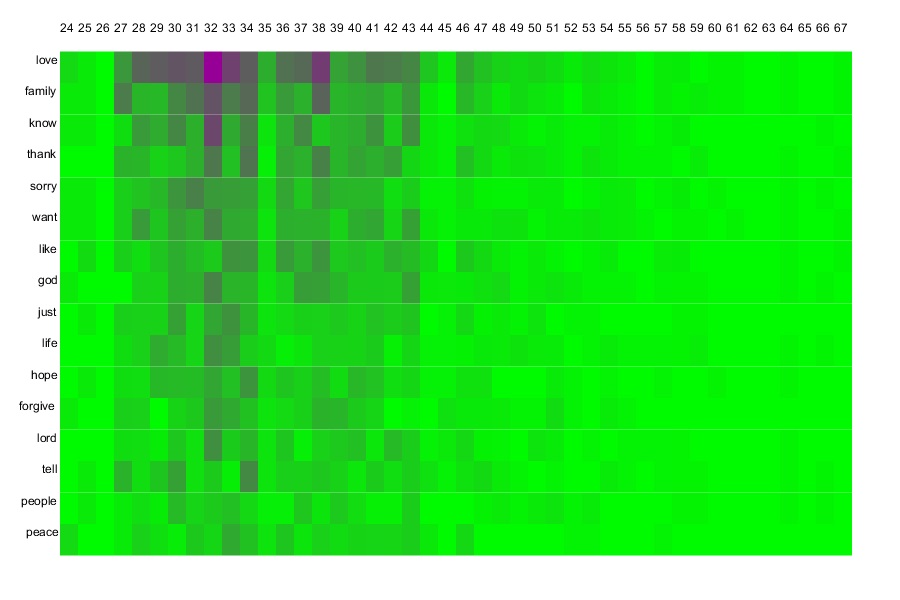
We can see how offenders in the age range 27-43 are more likely to have used these words in their final statements. We can also see that ‘love’ is important to offenders in this range. Perhaps when trying to prevent criminal activity among 27 to 43-year-olds, we should focus on the impact on loved ones.
For 32-year-olds, their priorities are more spread out over all the words we analyzed. In particular “love, family, know, thank, want, god, life and Lord”. Perhaps when trying to prevent criminal activity among those around 32 years of age, we should not only focus on the impact on loved ones but focus on their wants, our appreciation of them and their faith.